
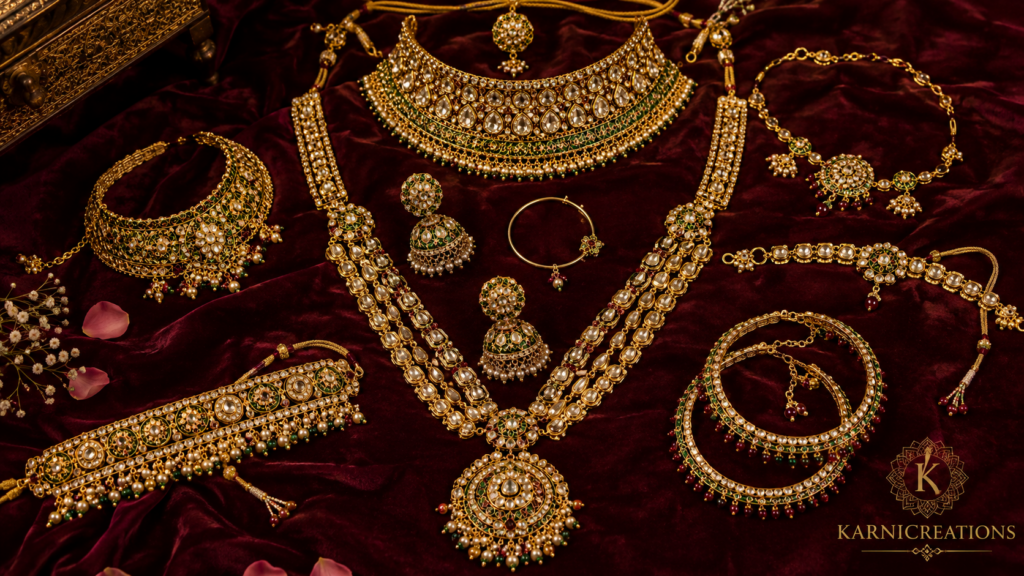
Rajasthani jewellery, also called Rajputi jewellery, is the set of traditional ornaments worn by Rajput women. Each piece has its own name, its own place on the body, and usually its own meaning. A bride wears them head to toe: a borla on the forehead, an aad at the neck, a bajuband on the arm, a kamarband at the waist, payal at the feet.
This guide lists every ornament, explains what it is and where it sits, and covers the crafts, regions, materials and styling behind them.
Key takeaways
- Rajasthani (Rajputi) jewellery is worn head to toe: borla, aad, bajuband, kamarband, payal and more.
- The borla (forehead) and the aad (broad neck choker) are the two most recognised pieces.
- It is built on crafts like kundan, meenakari, jadau and thewa, centred in Jaipur and Pratapgarh.
- It comes in gold, silver (925), gold-plated and lac, so there is a version for most budgets.
- A real kundan piece feels heavy, uses lac (not glue) and has meenakari on the back.
What Is Rajasthani / Rajputi Jewellery?
Rajasthani jewellery grew out of the old royal courts of Rajputana. The look is bold and colourful: heavy shapes, enamel (meenakari) work, and uncut stones held in gold or silver foil using the kundan technique. Women wear it at weddings, Teej, Gangaur and other festive days, and the choice of colour and design has long signalled a woman’s clan, region and married status. You will recognise a lot of these pieces from period films like Jodha Akbar and Padmaavat.
At a Glance: Rajputi Jewellery Names
| Ornament | Worn on | Also known as |
|---|---|---|
| Borla / Rakhdi | Forehead (maang tikka) | Rakhdi |
| Sheeshphool | Hairline / parting | Sheeshpatti |
| Matha Patti | Crown / hairline | — |
| Nath | Nose (left nostril) | Nathani |
| Jhumka / Bali | Ears | Karanphool |
| Timaniya | Neck (high choker) | Aad (regional) |
| Aad | Neck (broad choker) | Rajputana necklace |
| Kanthi | Neck (close choker) | — |
| Hasli | Neck (rigid choker) | Hansuli |
| Rani Haar | Long, to the waist | Maharani Haar |
| Bajuband | Upper arm | Angada / Bajubandh |
| Bangri | Wrists | Chuda / Bangadi / Pacheli |
| Haathphool | Hand & fingers | Hathphool |
| Kamarband | Waist | Tagdi |
| Payal | Ankles | — |
| Bichiya | Toes | Toe rings |
The History and Meaning Behind Rajputi Jewellery
Rajputi jewellery took shape under two influences. Rajput rulers loved precious stones and detailed gold work; the Mughals brought refined enamelling and new motifs. The two together produced the jewel-toned style worn today.
Most pieces also mean something. A nath and bichiya mark a married woman. The bajuband is linked to marital happiness. The borla is shaped like a flower bud. The broad aad was built almost like armour for the neck. So a full set is not only decoration. It tells you who the wearer is.
Head Ornaments
Borla (Rakhdi)
The borla is the maang tikka of Rajasthan, and it is hard to miss. Where most tikkas are flat, the borla is round, almost bell-shaped, and is said to stand for a flower bud. It hangs from a chain at the centre of the forehead. Brides wear it constantly, and it is usually made in gold or silver with kundan stones and meenakari.
Sheeshphool (Sheeshpatti)
The sheeshphool sits along the hairline, often built from a row of small rakhdis joined into a band across the forehead. The sheeshpatti version is a gold headband that frames the hairline and carries meenakari work on the underside. Both are usually detachable and pair with the borla.
Matha Patti
The matha patti is a bigger head piece made from several small borlas. It spans the crown and reaches down towards the forehead, giving a fuller frame to the face. Brides pick it for heavier, more formal looks.
Nose and Ear Ornaments
Nath (Nathani)
The nath is the nose ring, and in Rajasthan it marks a married woman. It goes on the left nostril and connects to the ear by a thin gold chain called a sankli. The Udaipur nath is the one people know best, with its floral cluster and pearl-and-stone detailing.
Jhumka, Bali and Karanphool
The ears get their own set. The jhumka is the bell-shaped earring, usually with pearl or stone drops. The bali is a hoop. The karanphool, literally “ear flower”, is a floral stud that sits on the lobe, sometimes with a chain looping over the ear for support. In a full set, all of these match the neck and head pieces.
Neck Ornaments (worn in layers)
A Rajputi neckline is built up in a set order, starting close to the throat and moving down to the longest piece.
Timaniya
The timaniya is a small choker that sits high on the neck, just below the collarbone. It is usually a three-string design set with uncut diamonds, and it is one of the older neck pieces in India. In some parts of Rajasthan, people use “timaniya” and “aad” to mean the same thing.
Aad
The aad is the neck piece most people picture first. It is a broad, rectangular choker that covers the whole neck, which is why it is also called the Rajputana necklace. In the old days it was shaped almost like armour. A good aad has a fringe (jhalar) of emeralds or seed pearls along the bottom edge, and traditionally the groom’s family gifts it to the bride.
Kanthi
The kanthi is a close choker, usually strung on an adjustable thread so it fits any neck. It sits between the aad and the longer necklaces.
Hasli (Hansuli)
The hasli is a stiff, solid choker that sits right at the base of the neck. It is one of the oldest Indian neck ornaments, made in heavy silver or gold. These days you will see a lot of oxidised silver hasli pieces worn for everyday and fusion looks.
Rani Haar (Maharani Haar)
The rani haar is the long necklace, dropping from the shoulders down towards the waist with a large centre piece. The longer, grander version is the maharani haar. Because it covers so much ground, it can be light jadau work or a heavy kundan-polki piece. The usual order on the neck is timaniya or aad first, then kanthi, then the rani haar.
Arm and Hand Ornaments
Bajuband (Angada)
The bajuband, or angada, is the armlet worn high on the upper arm, usually with meenakari work. Men wore it first; later it became a staple for Rajputi brides. Old designs used crocodile and snake motifs, and the piece is tied to marital happiness. Newer styles are common now too.
Bangri (Chuda / Bangadi / Pacheli)
Rajasthani women wear bangles in stacks that run up the forearm. The bangadi is a thicker pair with small gold bumps along it; the gold-and-diamond version is called a pacheli. The red-and-gold bridal chuda finishes the wrists.
Haathphool
The haathphool is a hand harness. A bracelet at the wrist connects by fine chains to rings on the fingers, covering the back of the hand. It is a finishing piece for the full bridal look.
Waist and Feet Ornaments
Kamarband (Tagdi)
The kamarband, also called a tagdi, is a waist belt worn over the lehenga or poshak. It shapes the waist, holds the drape in place, and adds weight to the overall look.
Payal
Payal are the anklets, often heavy and lined with small bells that ring as you walk. They are made in silver, since gold is not traditionally worn below the waist.
Bichiya
Bichiya are silver toe rings. They go on the bride’s toes during the wedding and mark her married status.
The Crafts Behind Rajputi Jewellery
The pieces above are made using a few well-known Rajasthani crafts:
- Kundan sets uncut stones into purified gold foil, held with refined lac rather than glue. Jaipur has been the kundan centre since Mughal times, and one necklace can pass through several artisans and take three to six weeks.
- Pachi Kundan is a softer, fully handmade kundan that uses raw, uncut stones set by hand pressure. Brides like it for its organic finish. We have covered how to spot a real one in our Pachi Kundan guide.
- Meenakari is coloured enamel work, strong in Jaipur, Alwar, Nathdwara and Pratapgarh. It usually goes on the back of a kundan piece, so the jewellery looks good from both sides. Motifs are mostly flowers, peacocks, parrots and elephants.
- Jadau is a technique, not a style. Stones are pressed into gold with foil and no soldering. It is done mainly in Bikaner and Jaipur and gives heavier, hand-built pieces.
- Polki uses uncut, unpolished natural diamonds in their raw form, with a rustic shine.
- Thewa is a 400-year-old Pratapgarh craft that fuses a sheet of 23-karat gold onto coloured glass to form tiny scenes. It earned a GI tag in 2018, costs more because of the slow work, and is fragile since it is built on glass.
- Lac (lakh) is light, colourful, low-cost jewellery, also linked with Jaipur.
Regional Styles of Rajasthan
Rajputi jewellery changes from one region to the next:
- Jaipur is the main centre for kundan-meena, polki, jadau, thewa retail and cheap lac jewellery. “Jaipuri jewellery” is its own shorthand.
- Pratapgarh is the home of thewa, the gold-on-glass craft with a GI tag.
- Bikaner is known for fine jadau and detailed gold and silver work.
- Udaipur and Mewar are known for the floral-cluster nath and good silver work.
- Jodhpur and Marwar (western Rajasthan) make heavy traditional bridal sets in kundan, polki and meenakari, central to the Marwari trousseau.
- Kota, Bundi and the Hadoti belt (eastern Rajasthan) do thewa, meenakari and beadwork.
- Tribal and Banjara styles use chunky silver with large hollow bells, layered belts and armlets.
Gold, Silver or Imitation? Picking the Right Material
Rajputi jewellery is made in several metals, so there is a version for most budgets:
- Gold is the choice for heirloom bridal pieces with real kundan and meenakari. The biggest spend, but it holds value and gets passed down.
- Silver (925) is traditional for payal, bichiya and hasli, and now common in oxidised finishes for festive and daily wear. A solid mid-range option.
- Gold-plated or brass with kundan-meena is the popular way to get the full bridal look without the gold price.
- Lac (lakh) is light and cheap, good for colourful festive pieces.
- Imitation or American diamond is budget party wear with plenty of sparkle.
If you are buying, spend on gold or fine kundan for the wedding-day set, and keep silver, plated or lac pieces for the smaller functions.
How to Choose Rajputi Jewellery for the Occasion
- Wedding day: a full, layered set. Borla, aad or timaniya, rani haar, bajuband and chuda, in kundan or polki to match a heavy poshak.
- Teej and Gangaur: colourful meenakari pieces and a statement borla suit these festivals.
- Sangeet and reception: go lighter. A single rani haar or a bold pair of jhumkas lets you move and dance.
- Festive and everyday: one oxidised silver piece, like a hasli or jhumka, lifts a plain outfit.
Two small tips. Match the meenakari and stone colour to your poshak. And pick a borla for your face: a slightly longer tikka suits a rounder face, a compact one suits a longer face.
Styling Rajputi Jewellery with Modern Outfits
You do not have to wear these only with full traditional dress. Oxidised hasli necklaces, silver jhumkas and stackable bangri work with sarees, gowns, kurtas and Western clothes. Keep it simple: pick one piece as the highlight and go light on the rest. Many newer designs are convertible too. A rani haar can double as a plainer necklace, and a borla can be worn as a pendant, so one piece stretches across several occasions.
How to Build a Complete Rajputi Bridal Set
Working head to toe keeps it simple:
- Head: borla (or rakhdi) with a sheeshphool or matha patti
- Face: nath on the nose, matching jhumkas or karanphool
- Neck (layered): timaniya or aad, then kanthi or hasli, then the rani haar
- Arms and hands: bajuband, bangri/chuda, haathphool
- Waist and feet: kamarband, payal, bichiya
The whole set is meant to go with a Rajputi poshak or lehenga, with the stone and enamel colours picked to match the outfit.
Caring for Rajputi Jewellery
A bit of care keeps these pieces in good shape for years:
- Store each piece on its own, in a soft cloth or lined box, so stones do not scratch.
- Keep it away from water, perfume and sweat. Moisture can loosen the lac base and the gold foil.
- Put it on last when you are getting ready, and take it off first.
- Wipe it with a dry, soft cloth only. Skip liquid cleaners and ultrasonic machines on kundan and meenakari.
- Handle thewa carefully, since it sits on glass and can crack.
- For polishing or repairs, take it back to the jeweller instead of doing it yourself.
Rajputi Jewellery Trends Right Now
The classics stay popular, but a few things are selling well at the moment: lighter, minimal kundan for comfort, convertible pieces that work across outfits, oxidised silver for daily and fusion wear, soft pastel meenakari for younger brides, and more interest in handmade pieces over mass-produced ones.
Frequently Asked Questions
What is the forehead ornament in Rajasthani jewellery called?
It is called a borla (or rakhdi), a round, bell-shaped maang tikka worn at the centre of the forehead and unique to Rajasthan.
What is the difference between an aad and a timaniya?
An aad is a broad, rectangular choker that covers the whole neck. A timaniya is a smaller, daintier choker worn higher on the neck. In some regions the two names are used for the same piece.
What is the Rajasthani nose ring called?
The traditional nose ring is the nath or nathani, usually worn on the left nostril and joined to the ear by a fine chain.
Which jewellery does a Rajputi bride wear?
A full Rajputi bride wears the borla, sheeshphool, nath, aad or timaniya, hasli, rani haar, bajuband, bangri, haathphool, kamarband, payal and bichiya, head to toe.
What is the most famous Rajasthani jewellery piece?
The borla and the aad are the two most recognised pieces, both treated as signatures of the Rajasthani and Rajputi bridal look.
What is Jaipuri jewellery?
Jaipuri jewellery is the styles Jaipur is known for, mainly kundan-meena, polki, jadau, thewa and affordable lac (lakh) jewellery.
What is thewa jewellery?
Thewa is a Rajasthani craft from Pratapgarh in which a thin sheet of 23-karat gold is fused onto coloured glass to form intricate designs. It carries a GI tag and is collected as an art form.
Is Rajasthani jewellery made of real gold?
It can be gold, but a lot of it is made in silver, gold-plated or lac bases with kundan and meenakari work, which keeps it affordable. Ask for purity details before buying.
What are kundan and meenakari?
Kundan is the technique of setting uncut stones in gold foil. Meenakari is the coloured enamel work that decorates the metal, often on the back of the piece, which makes it reversible.
Can I wear Rajputi jewellery with a saree or Western outfit?
Yes. Oxidised silver pieces like a hasli, jhumkas or stackable bangri go well with sarees, gowns and Western wear. Keep one piece as the statement and the rest minimal.
How much does a Rajputi bridal set cost?
It depends on the metal (gold, silver or plated), the stones, the craft and the number of pieces. Real-gold kundan sets cost the most, while gold-plated and lac pieces give the same look for far less. Ask the seller for a clear breakdown of metal and stone type.